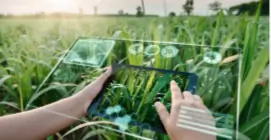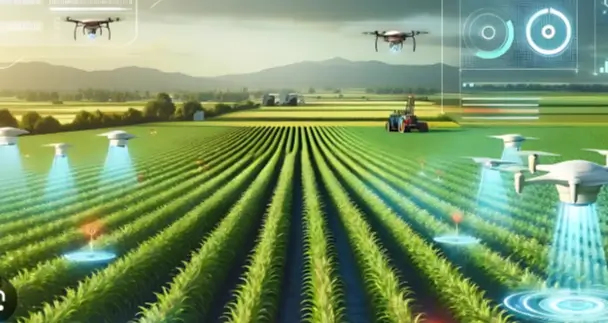
AI-enabled crop monitoring combines satellite, drone, and sensor data to deliver location-specific insights on growth and stress. It translates imagery and signals into actionable guidance for irrigation, fertilization, and pest management, with governance ensuring quality and traceability. Scalable models map findings to concrete actions and alerts, supporting transparent decisions. Yet practical adoption hinges on data integration, trusted metrics, and evolving agronomic needs—challenges that invite careful examination as the system scales.
What AI-Driven Crop Monitoring Means for Farmers
AI-driven crop monitoring redefines how farmers observe field conditions by combining satellite and drone imagery with on-the-ground sensors to deliver real-time, location-specific insights. The approach yields actionable data on growth stages, stress indicators, and resource use, enabling autonomous decision-making.
Caregiver crops, diversified portfolio planning, and marketplace insights emerge as measurable outcomes through disciplined data integration and transparent reporting.
How Sensors, Drones, and Satellites Feed AI Insights
Sensors, drones, and satellites converge to feed AI insights with precise, multi-scale data streams. In practice, sensor networks capture environmental and crop signals, while data fusion integrates heterogeneous sources for coherent indicators. Drone analytics assess plant health and stress, translating imagery into actionable crop indices. This approach enables scalable monitoring, empowering farmers to interpret complex signals with evidence-based, freedom-oriented clarity.
See also: How AI Helps Farmers Increase Crop Production
Turning Data Into Action: AI-Powered Decisions on Irrigation, Fertilization, and Pest Management
By converting real-time sensor and imagery data into domain-specific decisions, AI systems optimize irrigation, fertilization, and pest management with measurable precision.
Across fields, data governance frameworks standardize inputs, quality controls, and traceability, supporting repeatable outcomes.
Decisions translate to mapped actions and alerts, while scalable model deployment ensures consistent performance under variable conditions and rapid adaptation to evolving agronomic needs.
Overcoming Barriers and Planning for the Future of AI in the Field
Data ownership and farmer training emerge as central levers; clear governance, transparent data protocols, and scalable education programs enable growers to adopt AI with confidence, adaptability, and shared benefits.
Frequently Asked Questions
How Accurate Are AI Pest Predictions Across Crops?
AI pest accuracy varies and is crop-specific; current data shows moderate-to-high accuracy in some crops, but significant variability exists. Crop-specific predictions require local validation, robust datasets, and continuous calibration to maintain reliable performance for field-scale decisions.
What Is the ROI for Small Farms Adopting AI Monitoring?
ROI for small farms adopting AI monitoring varies, with initial costs offsetting over time; typical ROI benchmarks range 2–5x, depending on crop, scale, and seasonality, considering cost структуры, operational savings, and yield improvements.
Do AI Systems Require Internet Access in Fields?
A tethered vine orbits uncertainty: AI connectivity is not always required; some systems operate offline, while field autonomy improves with intermittent internet. In practice, operators balance connectivity needs, data latency, and local processing to optimize agricultural decisions.
How Is Data Ownership Handled With AI Platforms?
Data ownership is typically defined by user agreements, with platforms often claiming rights to aggregated insights while preserving farmer control over raw data; privacy concerns arise from data sharing, third-party access, and potential misuse; transparency and opt-out mechanisms are essential.
Can AI Replace Agronomists in Decision-Making?
AI cannot fully replace agronomists in decision-making; it augments judgment with data-driven insights, yet human expertise remains essential for context, ethics, and field interpretation, fostering fieldwork partnerships and rigorous AI ethics within evidence-based practice.
Conclusion
AI-driven crop monitoring translates heterogeneous data into precise field actions, enabling proactive and scalable farmmanagement. By integrating satellite, drone, and on-the-ground sensors, growers gain real-time insights into growth stages and stress, driving targeted irrigation, fertilization, and pest strategies. An illustrative stat: farms with AI-guided irrigation saw water use reductions of 15–25% while maintaining yields. This evidence-based approach supports governance, traceability, and adaptive planning, anchoring decisions in measurable outcomes and paving the way for widespread, data-driven adoption.